1.
|
Migratory Bird Activity
|
|
|
1.1
|
Indian subcontinent plays host to a number of migratory birds in summers as well as winters over a hundred species of migratory birds fly to India, either in search of feeding grounds of to escape the severe winter of their native habitat.
|
|
|
1.2
|
The altitudes of migrating birds vary with winds aloft, weather fronts, terrain elevations, cloud conditions, and other environmental variables. While over 90 percent of the reported bird strikes occur at or below 3,000 feet AGL, strikes at higher altitudes are common during migration. Ducks and geese are frequently observed up to 7,000 feet AGL and pilots are cautioned to minimize en-route flying at lower altitudes during migration.
|
|
|
1.3
|
Usually, Kingfisher, Rosy, Pelican, Wood Sandpiper, Starling Blue throat, Long billed Pipit birds start migrating towards other areas when they perceive the tailwind to be favorable. However, once they start their migration, nothing can stop them except extremely bad weather. Many birds like Siberian Cranes, Greater Flamingo, Ruff and Black Winged Stilt prefer to fly at a higher altitude while migrating. They start journey when they feel they have put on enough fat to provide them energy throughout the journey.
|
|
|
2.
|
Reducing Bird Strike Risks
|
|
|
2.1
|
The most serious strikes are those involving ingestion into an engine (turboprop and turbine jet engines) or windshield strikes. These strikes can result in emergency situations requiring prompt action by the pilot.
|
|
|
2.2
|
Engine ingestions may result in sudden loss of power or engine failure. Review engine out procedures, especially when operating from airports with known bird hazards or when operating near high bird concentrations.
|
|
|
2.3
|
Windshield strikes have resulted in pilots experiencing confusion, disorientation, loss of communications, and aircraft control problems. Pilots are encouraged to review their emergency procedures before flying in these areas.
|
|
|
2.4
|
When encountering birds en route, climb to avoid collision because birds in flocks generally distribute themselves downward, with lead birds being at the highest altitude.
|
|
|
2.5
|
Avoid overflight of known areas of bird concentration and flying low altitudes during bird migration. Charted wildlife refuges and other natural areas contain unusually high local concentration of birds which may create a hazard to aircraft.
|
|
|
3.
|
The Indian migratory route:
|
|
|
|
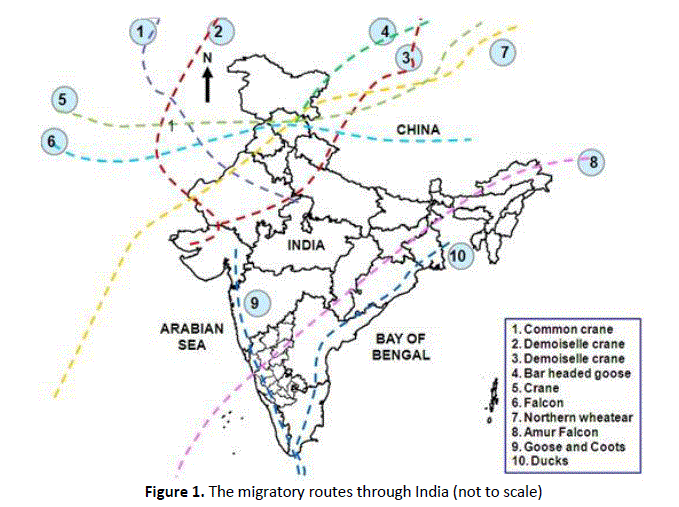
The pattern of migration shows movements of the birds from the Siberian region crossing the Trans Himalayas and even the mightiest greater Himalaya. Many cranes sp. as red crowned crane, bar headed goose (Figure 1) and the high souring raptors do cross these high ranges to enter India and finally leave towards Africa during the winters. The Siberian birds do also enter the country through the north eastern
Himalayan ranges (Figure 1). This route traverses through the Western Ghats and southern parts of India
before leading the birds to Africa (Figure 1).
|
|
There are also the birds which enter India from the north western side and from the Mexican region (Figure 1). Some birds do migrate along the eastern and the western coasts of the country to Africa and Sri Lanka. According to the geographical location in the Indian Continent, the land of Sri Lanka is situated at the extreme southern point beyond the south of India. The stretch of ocean from here to the south pole contains no other land. Hence, for the migrant birds that travel south from India, Sri Lanka is the final destination.
The migrant birds take this route initially from Europe, West Asia including Western Siberia, and from the western regions of Himalaya including Kashmir. From the northern and northeastern parts of the world, along the Eastern coast line of India, towards the south. Passing the coastline between Kalmier point and Ramesvaram, which is further south these migratory birds arrive in Sri Lanka from India, from East Asia which includes eastern Siberia and Mongolia, from the Eastern regions of Himalaya including Tibet, these migratory birds fly along this route initially.
Apart from the above-mentioned two routes there is still another route to the North Eastern coast of Sri Lanka, which is the Andaman Islands flying route. This route falls across the Andaman Islands in the Indian Ocean. It is believed that these migratory birds arrive in Sri Lanka along this route from south East Asia and the East each year. Each year the migratory season commences in October and ends in April - May in the following year. Very often, the birds take the same route they arrived. However, some birds return along different routes.
|
|
|
4.
|
Reporting Bird and Other Wildlife Activities
|
|
|
4.1
|
If you observe birds or other animals on or near the runway, request airport management to disperse the wildlife before taking off. Also contact the nearest tower regarding large flocks of birds and report the:
|
|
|
4.1.1
|
Geographic location.
|
|
|
4.1.2
|
Bird type.
|
|
|
4.1.3
|
Approximate numbers.
|
|
|
4.1.4
|
Altitude.
|
|
|
4.1.5
|
Direction of bird flight path.
|
|
|
5.
|
Pilot Advisories on Bird and Other Wildlife Hazards
|
|
|
5.1
|
Many airports advise pilots of other wildlife hazards caused by large animals on the runway through the AIP supplement and the NOTAM system. Collisions between landing and departing aircraft with animals on the runway are increasing and are not limited to rural airports. These accidents have also occurred at several major airports. Pilots should exercise extreme caution when warned of the presence of wildlife on and in the vicinity of airports. If in close proximity to movement areas you observe deer or other large animals, advise the FSS, tower, or airport management.
|
6.
|
Protected Areas.
|
|
|
|
The details of the protected areas in India may be seen at:
http://www.wiienvis.nic.in/Database/Protected_Area_854.aspx
|
|
|
7.
|
AREAS WITH SENSITIVE FAUNA
|
|
|
7.1
|
Many species of birds and animals are sensitive to noise from aircraft and overflying their breeding and resting places may be critical. Hence it is suggested to avoid over flying these protected areas below 1000ft.
|
|
|